Emergency Stop on the Driving Test: What Happens and How to Practise It
Last updated 1 November 2026
How the emergency stop works on the UK practical test, what the examiner signals, and how to practise it safely with your instructor.
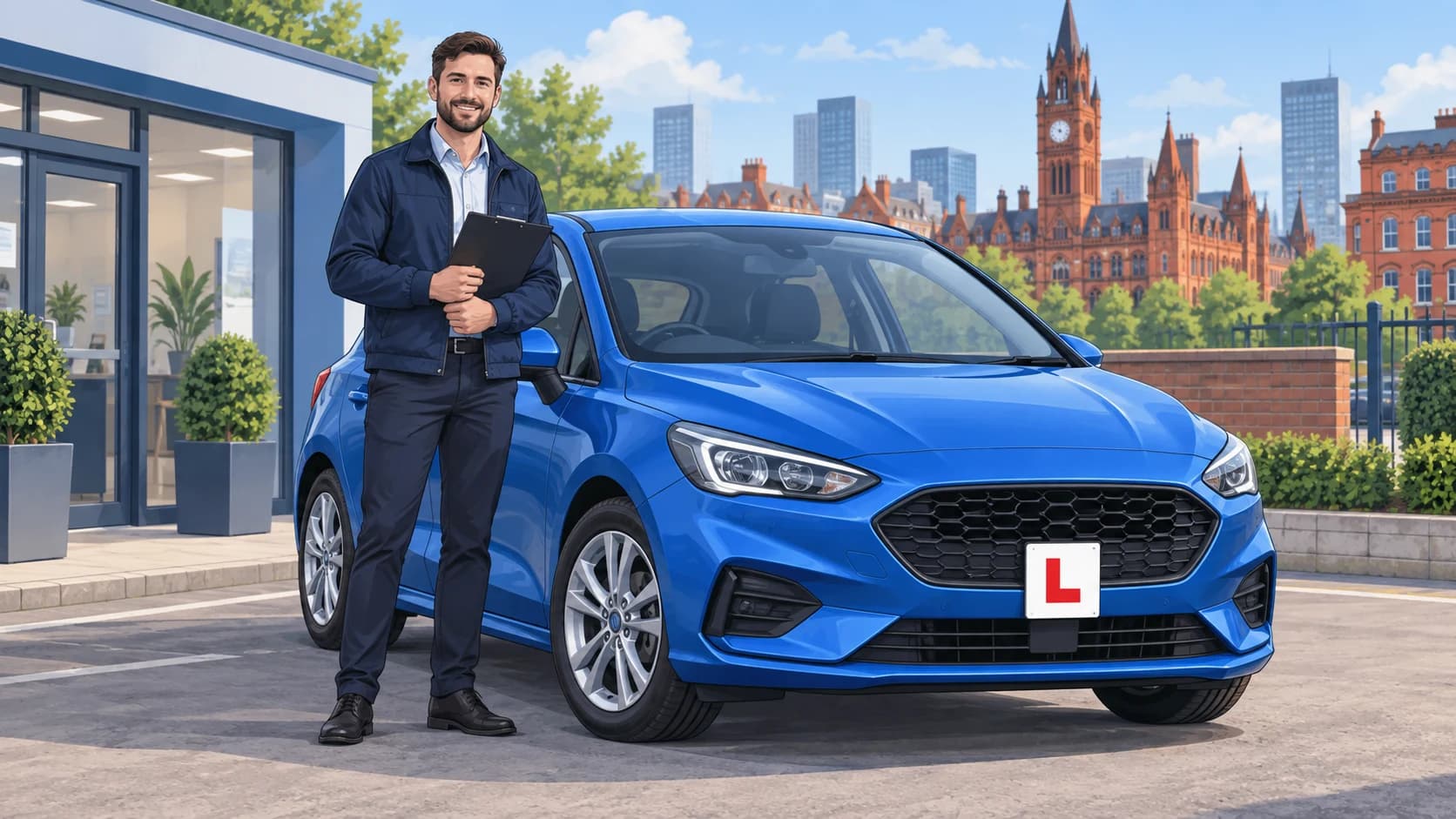
The emergency stop sounds dramatic, but on the test it is a controlled exercise, not a surprise. You will know it is coming, you will have practised it with your instructor, and the examiner will only ask for it when it is safe to do so.
Will you be asked for one?
Not on every test. Current DVSA examiner guidance says the emergency stop is carried out in 1 of every 7 tests. Older guides that say 1 in 3 are out of date — do not plan your test around that figure.
If a real emergency stop happens naturally during your drive, for example because someone steps out in front of you, the examiner will usually count that and will not ask for a separate demonstration. Either way, the skill is the same: stop promptly, under control, and then move off safely.
What the examiner does first
You will not be asked to stop suddenly out of nowhere. The usual pattern is:
- The examiner asks you to pull up on the left in a safe place.
- They explain what is about to happen and what signal they will give you.
- You move off again, and when they give the signal, you stop as if it were a real emergency.
If you do not understand the signal or the explanation, say so before you move off. That is far better than guessing while you are driving.
How to do it
Keep both hands on the wheel, brake firmly and promptly, and press the clutch down so the car does not stall. Keep the car straight — swerving towards the kerb or into another lane defeats the point of the exercise, however quickly you stop.
Once stopped, secure the car with the handbrake, put it in neutral if your instructor has taught you that routine, and then do a full all-round check before moving off again. The examiner is watching your control and your observations, not just your stopping distance. Stopping a fraction slower but staying straight and in control is better than stopping violently and losing control.
In wet weather, stopping distances are longer. Your instructor will help you judge this in lessons — do not try to compensate by braking later or harder than you have practised.
Common mistakes
- Hesitating after the signal, then braking gently as if it were a normal stop.
- Pressing the clutch too late and stalling, or leaving it down so long you lose drive.
- Looking down at the pedals instead of ahead.
- Moving off again without checking mirrors and blind spots.
- Practising emergency stops on your own, on busy roads, without an instructor agreeing the signal and the place first. Practise this only in lessons, on a quiet road your instructor chooses.
How to practise
Ask your instructor to build it into lessons gradually: first a normal prompt stop, then a firmer stop, then the full exercise with the agreed signal. Practise the move-off afterwards just as carefully as the stop itself, because observation faults after the stop are easy to pick up when you are relieved it is over.
If you are learning with Learn and Drive, your instructor will cover the emergency stop as part of test preparation, along with the manoeuvres and independent driving. See our driving test day checklist and practical test booking guide to plan the rest of test day, and our areas we cover page if you are checking whether we pick up near you — we work on a door-to-door pickup model from Manchester, not from local branches.
Rules and test format can change. Check GOV.UK before your test for the current version, and ask your instructor if anything in this guide differs from what they are teaching you now.
Related guides
Learning to drive in Manchester?
Free mock theory tests and hazard perception practice, and lessons with instructors who can see how you're doing.