How to Find Your Nearest Driving Test Centre (UK Guide 2026)
Admin5 min read
How to find your nearest driving test centre, check facilities and parking, and choose the one that suits your driving best.
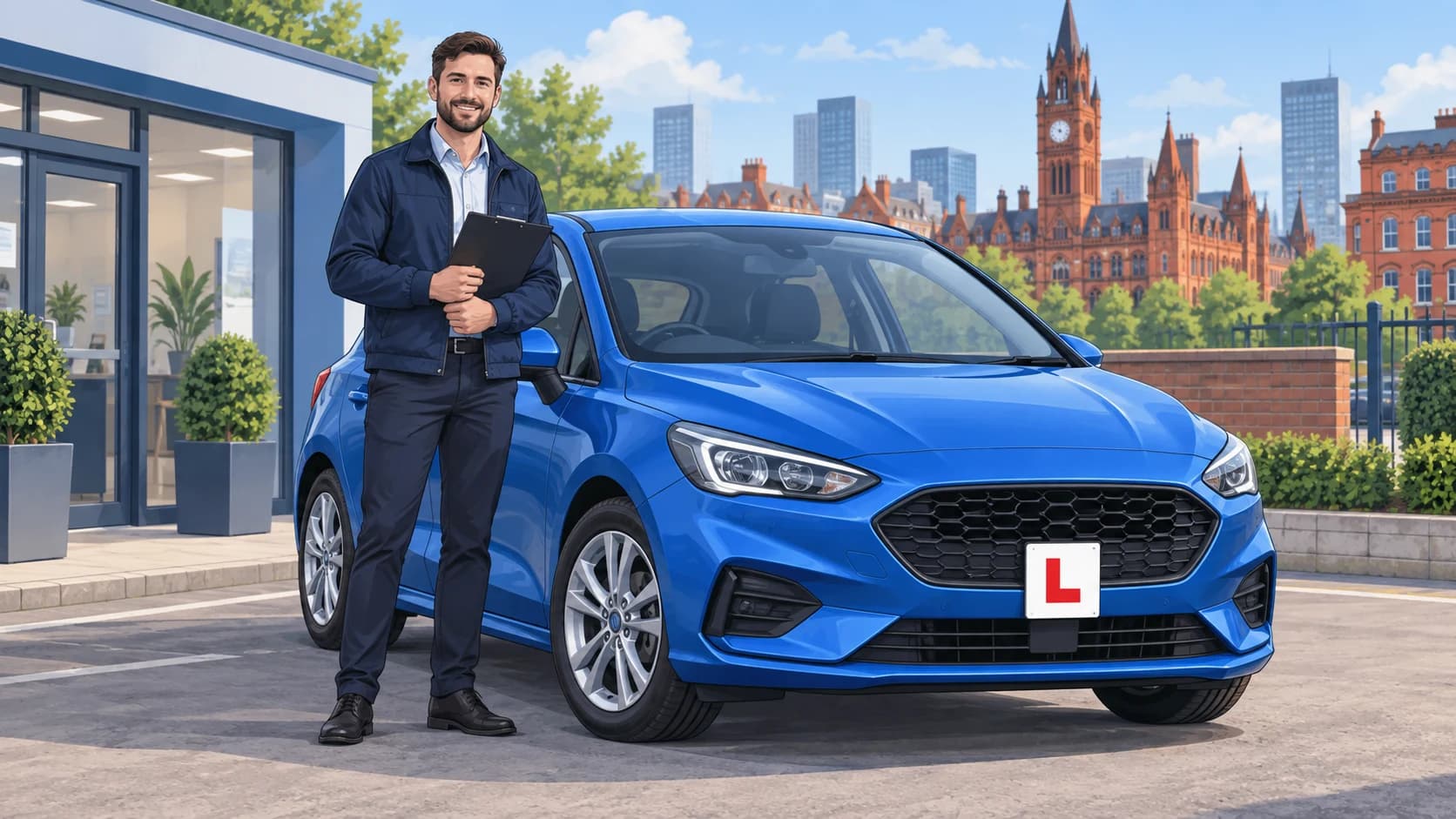
(If you're searching "driving test center" — that's the American spelling. In the UK it's a driving test centre, run by the DVSA in Great Britain and the DVA in Northern Ireland. This guide uses the UK spelling throughout.)
Your choice of test centre matters more than most learners realise. Routes differ — some centres favour rural lanes and high-speed dual carriageways, others throw you into one-way systems and multi-lane roundabouts within minutes. The sensible approach is to pick the centre your lessons have prepared you for, not just the nearest one on the map.
Step 1: use the official finder
GOV.UK's "find a driving test centre" service lists every DVSA practical test centre in England, Scotland and Wales with its address, the tests it offers (car, motorcycle, ADI), parking information, toilet facilities and disabled access. For Northern Ireland, nidirect's test-centre pages list the DVA centres. Start there — third-party lists go out of date when centres move or merge.
Step 2: check the practical details
Before you fixate on a centre, check:
Parking. Some centres have no candidate parking at all (you park nearby and walk in); others have on-site bays. It matters for test-day logistics, not for the test itself.
Tests offered. Not every centre does every category — confirm yours offers car tests.
Disabled access and facilities. Listed on the GOV.UK page; call ahead if you have specific needs.
Theory vs practical. Theory test centres are separate premises run by a different contractor. Don't turn up for a practical at a theory centre address.
Step 3: pick the centre that suits your driving
This is where local knowledge pays off. Consider:
Where you've actually practised. A centre 10 minutes from your instructor's usual patch beats a "nicer" centre 40 minutes away where you've never driven. Examiners assess the same manoeuvres everywhere; unfamiliar roads add cognitive load you don't need.
Route character. Our test-centre guides break down what local routes actually involve — for example, our West Didsbury guide covers the Princess Parkway and Nell Lane features Manchester learners face, and our full test-centre directory covers centres across the North West.
Waiting times. Waits vary hugely by centre — the National Audit Office put the national average at 22 weeks in late 2025, but some centres run shorter and others sit at the 24-week maximum. The booking service shows availability per centre, so compare a few within reach.
Pass rates. The DVSA publishes pass rates per centre. Treat them cautiously: they reflect the local learner population as much as the centre's difficulty. A low pass rate at a centre where nervous first-timers cluster doesn't mean the routes are harder.
What to do once you've chosen
Book through GOV.UK only (or nidirect in NI). Third-party booking sites charge a markup for the same appointment. Current fees: £62 weekday, £75 evenings/weekends/bank holidays. See our practical test booking guide.
Get lessons around the centre. Even two or three lessons on the local roads — the specific roundabouts, the tricky junctions, the manoeuvre spots — measurably reduce test-day surprises. If you're learning with us in Manchester, your instructor will do this as standard for your chosen centre.
Visit beforehand if you can. Driving past the centre, finding the entrance and the parking, removes a surprising amount of test-day stress. Our test-day checklist covers the rest of the preparation.
What happens at the centre on test day
Knowing the building helps as much as knowing the roads. A typical practical test appointment runs like this:
Arrive ~10 minutes early and park as directed (candidate bays where they exist, or nearby street parking where they don't).
Wait in the waiting room with your provisional licence ready. The examiner calls your name at the appointment time.
Licence check and eyesight test — you sign a declaration, confirm insurance/residency details, then read a number plate from 20 metres outdoors. Fail the eyesight check and the test ends there.
"Tell me" question by the car, then you drive for about 40 minutes: general driving, around 20 minutes of independent driving (mostly sat nav), one manoeuvre, possibly an emergency stop.
Back at the centre, the examiner gives you the result immediately, with feedback on any faults. Pass, and you get your certificate on the spot.
Facilities are basic — a waiting room and toilets are near-universal; vending machines and coffee are not. Eat before you go.
Changing or moving your test centre
Life changes: you move house, your instructor retires, you spot an earlier date elsewhere. From 2026, car practical bookings in GB can only be changed twice, with at least 10 full working days' notice before the test — and learners must manage their own bookings (instructors can't book or change tests for pupils anymore). That makes centre choice more consequential than it used to be: pick thoughtfully once, rather than planning to hop centres later. Cancellation slots do appear daily as others move their tests, but building a strategy around them is gambling with your two changes. Our booking guide covers the current rules in full.
Temporary and relocated centres
One current caveat: the DVSA periodically moves centres, merges them, or operates temporary sites while buildings are refurbished — several centres in recent years have run from alternative premises (community buildings, business parks) with exactly the same test standard. The GOV.UK finder and your booking confirmation always carry the current address; check both before test day rather than relying on an old instructor anecdote or a third-party directory. If your centre moves after you booked, the DVSA emails you — check the inbox (and spam folder) attached to your booking.
Northern Ireland: different system
In NI, practical tests are run by the DVA, booked through nidirect, and cost £65 on weekdays or £95 on evenings, weekends and public holidays. Theory and practical centres are separate. See our Belfast test booking guide for the full NI picture.
Frequently asked questions
How do I find my nearest driving test centre?
Use GOV.UK's official "find a driving test centre" service for England, Scotland and Wales, or nidirect's pages for Northern Ireland.
Can I take my test at any centre, or must it be my nearest?
Any centre — there's no catchment rule. But choose one where you've practised the local roads.
Why do waiting times differ between centres?
Examiner capacity vs local demand. The national average was 22 weeks in late 2025 (National Audit Office); check the booking service for per-centre availability.
Do some test centres have higher pass rates?
Yes, but the numbers reflect the local candidate mix as much as the routes. Don't pick a centre on pass rate alone — pick it on familiarity.
Is a "driving test center" the same as a "driving test centre"?
Yes — "center" is the American spelling. In the UK, the official term is "driving test centre".
What's the difference between a theory test centre and a practical test centre?
They're separate premises, often in different locations. Theory centres are computer-based rooms; practical centres are where the examiner meets you and the on-road test begins.
Learning to drive in Manchester?
Free mock theory tests and hazard perception practice, and lessons with instructors who can see how you're doing.