Under 17 Driving Lessons: What's Legal Before You Turn 17
Admin6 min read
Can you learn to drive under 17? Private land rules, young driver experiences, and how to use the time before 17 to pass faster afterwards.
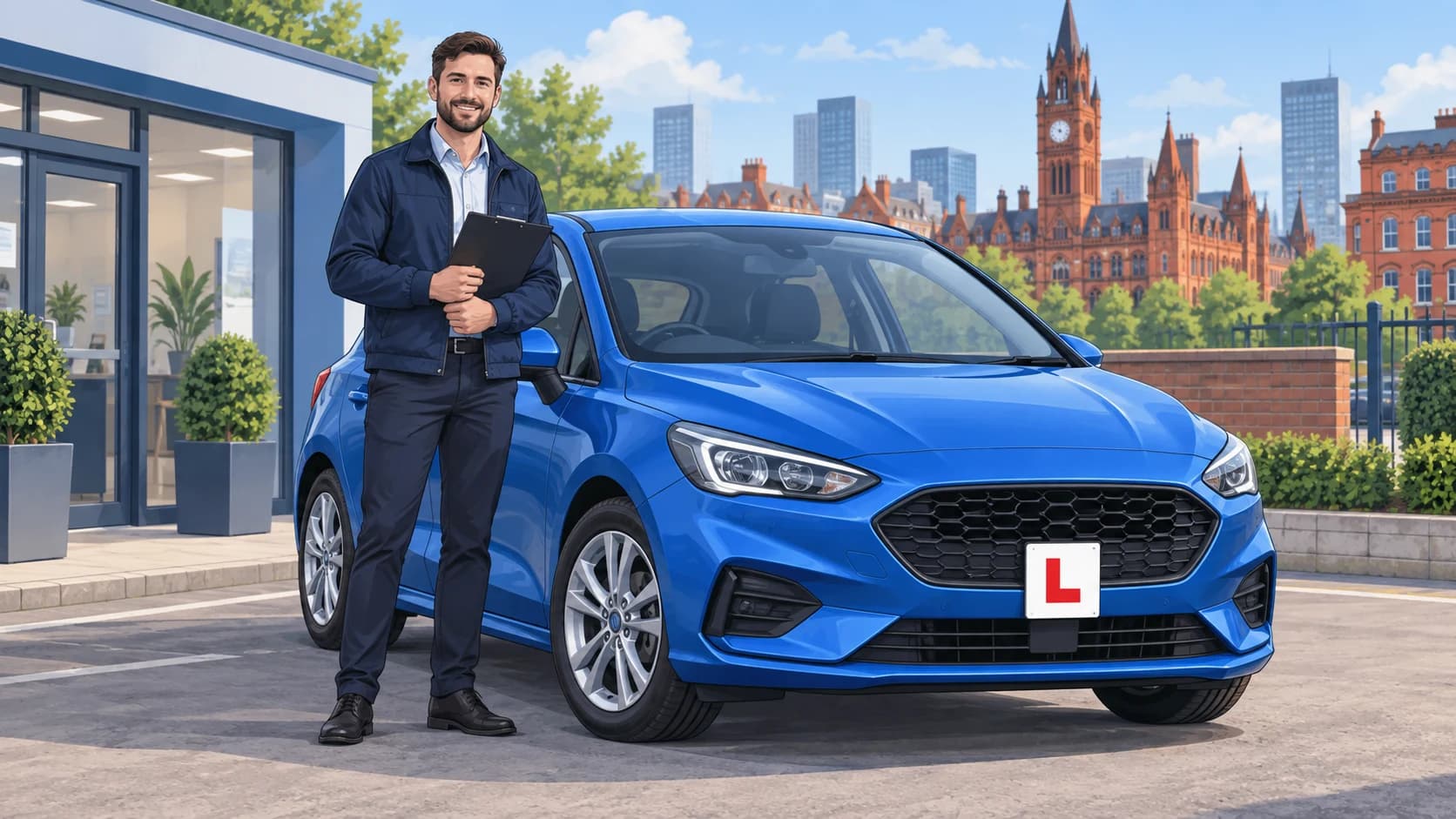
You can't drive on public roads until you're 17, and no instructor can take you out on the road before then — but that doesn't mean the years before 17 are wasted. There are legal ways to get behind the wheel earlier, and smart ways to use the waiting time so you need fewer lessons (and less money) once you're eligible. This guide sets out exactly what's allowed and what's not.
The legal position, plainly
On public roads — any road the public has access to, including car parks that are open to the public — you must be 17 (with a valid provisional licence) to drive a car. No exceptions, no grey areas: an instructor cannot legally take a 16-year-old out on public roads for a lesson.
On private land, the picture is different. Driving on private land — somewhere the public has no access, like a private field or a closed circuit — doesn't require a licence, because road traffic law around licensing applies to public roads. The requirements are:
The landowner's permission — this is essential. Driving on someone's land without permission is trespass regardless of age.
The land must genuinely be private with no public access. A supermarket car park after hours doesn't count — it's still a place the public has access to.
Insurance isn't legally required on private land, though it's strongly advisable — and the vehicle must not touch a public road at any point.
In practice, most under-17 driving happens through organised young driver experiences at private venues — airfields, circuits and dedicated training grounds — where the legalities, insurance and dual-controlled cars are all handled for you.
The exception: driving a car at 16 with disability benefits
There is one genuine exception to the "17 for cars" rule. According to GOV.UK, you can learn to drive a car and take your tests at 16 if you receive certain disability benefits — in England and Wales, the enhanced rate of the mobility component of Personal Independence Payment (PIP), or the higher rate mobility component of Disability Living Allowance (DLA) for children where you've applied for PIP. Scotland has equivalent arrangements through Child Disability Payment (CDP) and Adult Disability Payment (ADP).
If that applies to you, DVLA can grant a provisional licence a year early, and the normal rules apply from there: lessons with an instructor, theory test, practical test, and a full licence on passing. Adapted vehicles and specialist instructors exist for a wide range of conditions — ask any school you contact whether they offer adapted tuition.
There's also a smaller exception worth knowing: at 16 you can ride a moped (category AM) after CBT training, and light quadricycles are open from 16 too. For most teenagers, though, the car remains a 17th-birthday thing.
Young driver experiences: what they are
These are structured sessions (typically 30–60 minutes) run by specialist providers at private venues across the UK. They're aimed at 10–17 year olds and take place entirely on private land with an instructor beside you in a dual-controlled car.
What they're good for: basic car control — clutch, gears, steering, braking, pulling away and stopping — in a low-pressure environment. Learners who've done a few of these often need fewer early lessons because the "which pedal does what" phase is already behind them.
What they're not: they're not a shortcut to fewer lessons overall, and they don't count towards anything official. Road skills — junctions, roundabouts, traffic, the Highway Code in action — can only be learned on real roads from 17. Treat young driver sessions as a head start on car control, not as lessons banked.
Choosing one: look for providers operating at proper private venues with dual-controlled cars and qualified instructors, and check what's included in the session time (briefing vs actual driving time). Prices vary widely — compare the driving minutes, not the headline duration.
Using the wait productively
The months before 17 are some of the highest-value preparation time in the whole learning-to-drive journey, because theory knowledge compounds:
Apply for your provisional licence at 15 years and 9 months, so it arrives long before your 17th birthday and there's no admin delay to your first lesson. The online application costs £34 — see our provisional licence guide for the steps.
Study the theory properly. The theory test can be taken from 17, but nothing stops you learning the material at 16 — road signs, the Highway Code, stopping distances. Learners who arrive at their first lesson already fluent in signs and rules progress noticeably faster. Our free theory practice (6,500+ questions, 178-sign library) is open to all ages, and our guide on theory before lessons explains why early study pays off.
Ride as an observant passenger. Once you know some theory, start watching the road like a driver: read the signs ahead, predict what other drivers will do, notice mirror checks. It's free, and it builds the observation habits that lessons then refine.
Book your instructor early. Good instructors have waiting lists. Contacting one a month or two before your 17th birthday means your first lesson lands in your birthday week, not six weeks later.
The 17th birthday plan
When the birthday arrives:
Provisional licence in hand (applied for months ago — no waiting).
Theory study already underway — book the theory test (£23 on GOV.UK) as soon as you feel ready; a pass is valid for two years.
First lesson booked with an instructor you've already chosen.
Private practice arranged if a family member can supervise — they'll need to be 21+ with 3+ years on a full licence, and the car needs learner insurance (see our supervised practice guide).
Learners who do the pre-17 groundwork typically need fewer total lessons — and since lessons are the biggest cost in the whole process, the saving is real. The full route from here is mapped in our how to get your licence guide.
Frequently asked questions
Can a 16-year-old take driving lessons on public roads?
No. You must be 17 with a valid provisional licence to drive on public roads. Instructors cannot legally take under-17s out on the road.
Is it legal to drive on private land under 17?
Yes, with the landowner's permission, on land with no public access, and without using any public road. Insurance isn't legally required on private land but is strongly advisable.
Do young driver experiences count as lessons?
No — they don't reduce any official requirement (there isn't one) and they don't appear on any record. They're useful for basic car control, which can mean fewer early lessons once you're 17.
When can I apply for my provisional licence?
From 15 years and 9 months. Apply early so it's ready for your 17th birthday — it costs £34 online.
Can I take the theory test before I'm 17?
No — you must be 17 to take the car theory test. But you can study the full syllabus before then, which is one of the best uses of the waiting time.
Does practising before 17 mean I'll need fewer lessons?
Usually, yes — particularly the theory study. Learners who arrive fluent in signs and road rules spend their early lessons on car control rather than vocabulary, which typically means fewer total hours.
Learning to drive in Manchester?
Free mock theory tests and hazard perception practice, and lessons with instructors who can see how you're doing.