How to Pass Your Driving Test First Time
Pass your driving test first time: what the test involves, the five reasons most learners fail, and how to know you are ready.
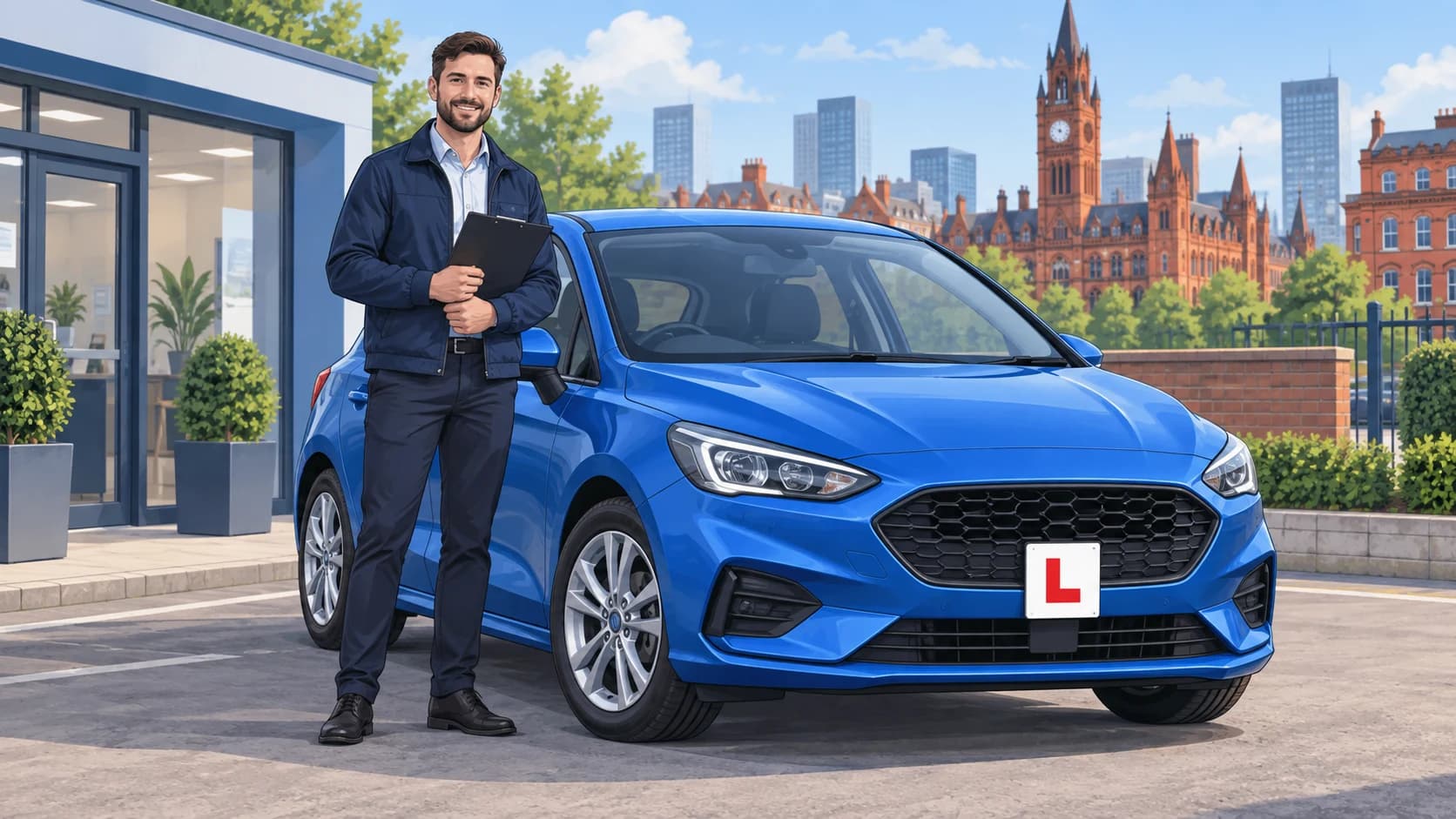
Passing your driving test first time is not luck. It is preparation meeting a test you understand before you sit it. About half of learners pass — nationally, 50.0% of car practical tests were passed in the 2025–26 financial year, 999,794 passes from 1,998,261 tests — so a first-time pass is normal, not exceptional. What separates the learners who pass first time from the ones who come back is rarely talent. It is knowing what the test measures, fixing the handful of faults that fail most people, and not booking until you are genuinely ready.
What the test actually involves
The car practical test has four parts, and you need to pass all of them in a single sitting. First, an eyesight check: you must read a number plate from 20 metres away if it is a new-style plate, or 20.5 metres for an old-style plate. If you cannot read it, the test ends there. Second, the show me, tell me questions: one tell me question before you drive, and one show me question while you are driving. Third, general driving ability — around 35 minutes of driving in total, including 20 to 35 minutes of independent driving, where you follow directions from a sat nav or from traffic signs. Fourth, one reversing exercise, chosen by the examiner from parallel parking, bay parking, or pulling up on the right and reversing about two car lengths.
There is no minimum number of lessons you must take before your test. The rule is readiness, not hours. You also need your theory test passed first — the theory pass certificate lasts two years, so your practical test must fall inside that window or you will have to pass the theory again. The theory test itself has two parts, multiple-choice questions (50 questions in 57 minutes, pass mark 43) and hazard perception (14 video clips, pass mark 44 out of 75), and you must pass both parts to pass it.
The pass mark — and what counts against you
You can make up to 15 driving faults and still pass. A driving fault is a mistake that is not potentially dangerous. One serious fault or one dangerous fault fails you outright, whatever else went right. A serious fault is something potentially dangerous; a dangerous fault involves actual danger to you, the examiner, the public or property. Repeated driving faults in the same area can also become a serious fault, so a small habit repeated three times can fail you where a single slip would not.
If you take a wrong turning, that alone is not a fault — the examiner will help you back onto the route. What matters is what you do while you are off route. And if you fail, you can rebook, but you must choose a date at least 10 working days after your last test.
The five reasons most learners fail
The DVSA publishes the most common reasons learners fail the practical test every year, and the list barely changes. The latest published guide covers tests taken between April 2024 and March 2025. The top five, in order, are:
- Not making effective observations at junctions. This has been the number one reason for years. It covers pulling out without looking properly, misjudging the speed of traffic coming towards you, and looking too late. It includes joining a dual carriageway from a slip road without checking, and going straight over a crossroads without looking both ways.
- Not using mirrors correctly when changing direction. Checking your mirrors is not enough on its own — the examiner wants to see you check them early enough to act on what you see, before you signal, change lanes or turn. Signalling first and checking mirrors second is the most common version of this fault.
- Not moving off safely. Pulling away without a blind-spot check, or into the path of another vehicle. The order is mirrors, blind spot, signal if needed, then a final look round — and only move off when it is safe.
- Incorrect positioning when turning right at junctions. Being in the wrong place, or hesitating when you should commit, when turning right across oncoming traffic.
- Not responding appropriately to traffic lights. Reacting late to amber, stopping past the line, or hesitating on green.
The remaining five categories on the DVSA list are steering control, responding correctly to road markings, responding correctly to traffic signs, driving at a safe and reasonable speed, and control and observation during reverse parking. Almost every item on the list comes down to the same two things: observation and planning. Four of the top ten involve observation alone.
How to know you are ready
The DVSA runs a Ready to Pass campaign with a simple message: only take your test when you can do everything without instruction. In practice, that means three things are true. First, you can drive for a full lesson without your instructor prompting you — no reminders about mirrors, no corrections on positioning, no prompts at junctions. Second, you have taken mock tests under test conditions and passed them, including the independent driving section and a reversing exercise you did not know in advance. Third, your instructor says you are ready, and you believe them — not because you want the test to be over, but because the driving feels ordinary.
If any of those three is missing, wait. A failed test costs more than the fee. A weekday practical test costs £62, and an evening, weekend or bank holiday test costs £75, and you will pay again to rebook — plus the lessons in between. Waiting a few weeks for readiness is almost always cheaper than failing and rebooking.
Test day: the small things that matter
Bring your UK photocard driving licence — if you have a paper licence, bring a valid passport as well. Arrive in good time and expect the examiner to check the car before you start. If you are taking the test in your own car rather than your instructor's, the car must meet the DVSA's rules: no safety warning lights, legal tyres with no space-saver spare fitted, an extra interior rear-view mirror for the examiner, a passenger seatbelt and head restraint, and L-plates front and rear. Our guide to using your own car for your driving test covers the full checklist.
Do not try to learn anything new on test day. Drive the way you have been driving in your lessons, exaggerate your mirror and junction checks slightly so the examiner can see them — they cannot see your eyes, only your head movements — and narrate nothing. If you make a mistake, carry on. One mistake is rarely a fail, and the examiner will only stop the test if they think your driving is a danger to other road users.
Getting started
If you are learning in Manchester, the route to a first-time pass starts with an instructor who will tell you honestly when you are ready and when you are not. Lessons are £35 an hour pay as you go, with door-to-door pickup, in a manual or an automatic car. When you enquire, say where you are with your theory test and how much driving you have done — that way your first lessons are planned around readiness, not around a test date you picked before you were ready.
Sources: GOV.UK, "Driving test: cars" (https://www.gov.uk/driving-test) — checked 6 November 2026. GOV.UK, "Theory test: cars" (https://www.gov.uk/theory-test) — checked 6 November 2026. GOV.UK, "Book your driving test" (https://www.gov.uk/book-driving-test). Ready to Pass campaign (https://readytopass.campaign.gov.uk/). DVSA, "Top 10 reasons for failing the driving test in Great Britain", April 2024 to March 2025, guide updated 14 August 2025. DVSA driving test data DRT122A (GOV.UK, 25 June 2026): 1,998,261 car practical tests, 999,794 passes, national pass rate 50.0%, financial year 2025–26.
Learning to drive in Manchester?
Free mock theory tests and hazard perception practice, and lessons with instructors who can see how you're doing.