What Is a Driving Assessment Lesson?
A driving assessment lesson is a first lesson where an instructor watches you drive and tells you what you need to learn. Who it's for and what happens.
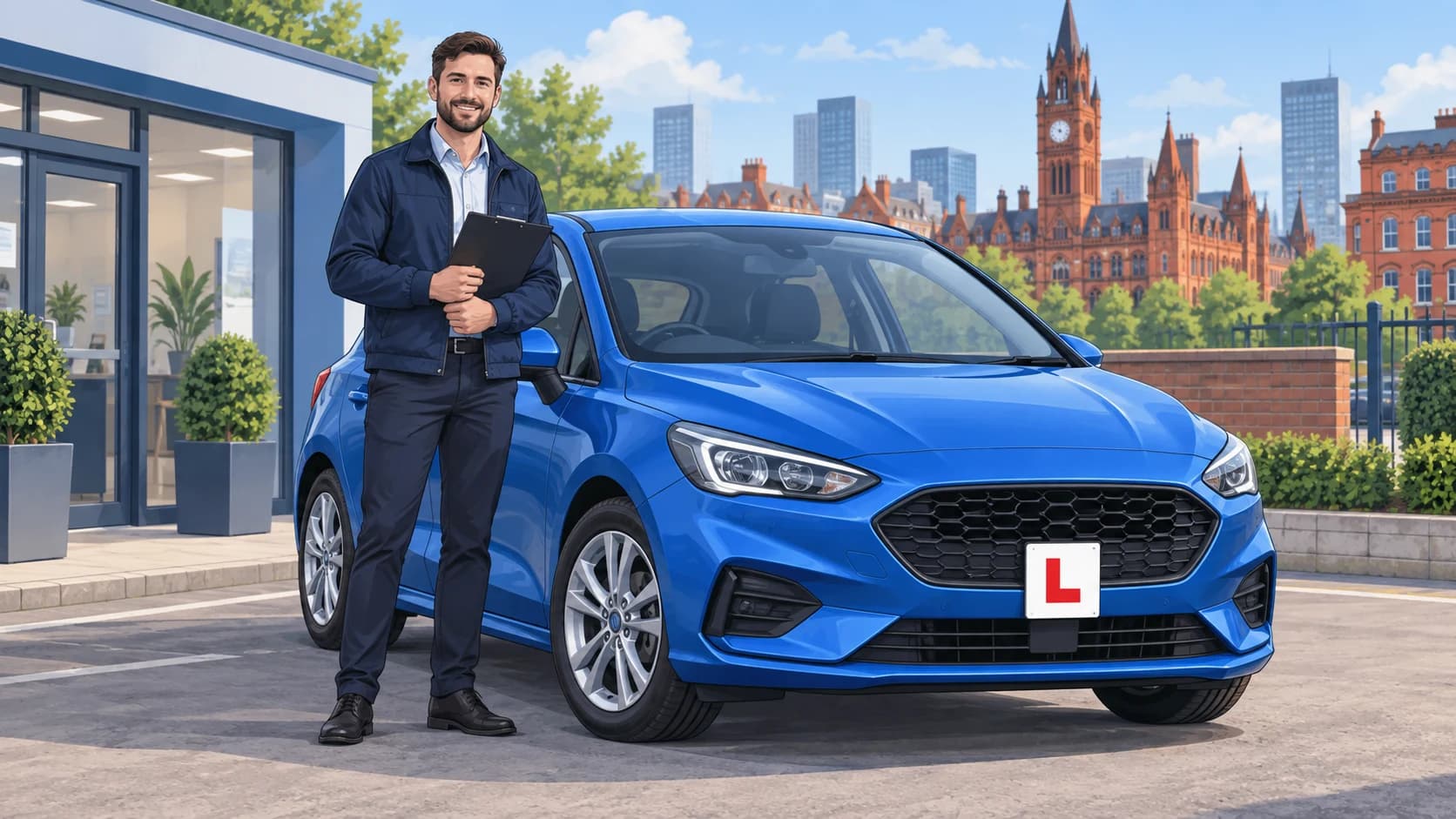
A driving assessment lesson is a first lesson in which an instructor watches you drive and then tells you, honestly, where you stand: what you can already do, what needs work, how many lessons you are likely to need, and whether you are ready to book a test. It is not a test. There is no pass or fail, no examiner, and no result that goes anywhere. It is a professional opinion, bought for the price of one lesson, that stops you from guessing — and from paying for a block of lessons you do not need, or booking a test you are not ready for.
Who it is for
An assessment lesson is for anyone who does not know where they stand. The most common cases are: a driver who learned abroad and now needs a UK licence; a driver who passed years ago, stopped driving, and wants to come back to it; a learner who has had lessons with another school and wants a second opinion before continuing; a learner who has failed a test and wants to know what actually needs fixing, rather than just taking more lessons and hoping; and a complete beginner who wants to find out what learning to drive feels like before committing to a course. It is also useful for a driver who has been told they need an intensive course, or a set number of hours, and wants an independent check on whether that is right.
If you are a complete beginner, an assessment lesson is simply your first lesson with a different name: the instructor will teach you the basics and watch how quickly you pick them up. If you already drive, it is a working drive: the instructor will ask you to drive in different conditions — town roads, roundabouts, faster roads, a manoeuvre or two — and will watch your observation, your control, your judgement and your confidence.
What happens in the lesson
The lesson usually starts with a short conversation. The instructor will ask about your driving history: where you learned, how long ago, how much you have driven since, whether you have taken a test before and what happened. Tell them the truth — they cannot assess you on information you have not given them, and there is no advantage in pretending to be better or worse than you are. Bring your licence: your instructor is required to check it and cannot legally teach you without it. You must be at least 17 and hold a valid UK provisional or full driving licence, and you must be able to read a number plate from 20 metres, wearing glasses or contact lenses if you need them.
Then you drive. The instructor will direct you, but they will not coach you through every decision the way they would in a teaching lesson — the point is to see what you do on your own. Expect a mix: moving off and stopping, junctions and roundabouts, independent driving where you follow signs or a sat nav, a manoeuvre, and possibly an emergency stop. The instructor will be watching for the things the practical test watches for: observation before changing direction, mirror use, lane discipline, speed judgement, control of the car, and how you recover when something goes wrong. They will also be watching for the habits that cost marks on test: coasting with the clutch down, late observations, poor positioning at roundabouts, and hesitation at junctions.
At the end, the instructor will talk you through what they saw. A good assessment ends with three things: a clear statement of your standard, a realistic estimate of how many lessons you need and what they should cover, and a recommendation — take a regular course, take a short refresher, book a test, or do more practice first. If the instructor cannot give you those three things, the lesson was not an assessment, it was just a drive.
What it is not
An assessment lesson is not a driving test, and it is not a mock test. A mock test is a rehearsal of the real thing: the instructor plays the examiner, follows the test format, and gives you a result against the test standard. An assessment is broader and more honest than that — it is about your driving as a whole, not about whether you would pass today. It is also not a guarantee: an instructor who says you are test-ready after one assessment lesson is giving you an opinion, not a promise, and the DVSA controls appointments, test standards and results. Treat any claim of a guaranteed pass with caution, from anyone.
It is also not a free lesson, and it is not a sales pitch. It costs the price of a lesson, and it should be treated as one: you are paying for an hour of an instructor's time and judgement. If the assessment turns into a hard sell for a large block of lessons, that tells you something about the school — a good assessment ends with a plan you can take or leave, not a contract you are pressured to sign.
How to prepare
Prepare the way you would for a first lesson. Bring your provisional or full licence, and your glasses or contact lenses if you need them. Tell the instructor beforehand, when you book, what your situation is: where you learned, how much you have driven, and what you want the assessment for. That lets the instructor plan the lesson around you instead of starting cold. If you have a previous test result, bring it — it tells the instructor exactly which faults were marked, which is more useful than any description you can give. And drive as you normally drive, not as you think you should drive for an audience. The instructor needs to see your real driving, including the bad habits, because the bad habits are what the plan is for.
What to ask at the end
The value of an assessment is in the conversation at the end, so ask questions. How many lessons do I need, and what will they cover? Am I ready to book a test, and if not, what is the one thing holding me back? Should I take a manual or an automatic, and what difference does it make to my licence? What would you practise first if you were me? And what would it cost? Write the answers down. A good instructor will be glad you asked, and a vague answer to a direct question is itself an answer.
Assessment lessons and the UK test
If you are an American or other overseas driver who needs a UK licence, an assessment lesson is the fastest way to find out how much work the UK test will take. You already know how to drive, so the question is not whether you can drive but whether you can drive to the UK test standard — roundabouts, observation routines, lane discipline, manoeuvres — and an assessment answers that in an hour. The UK process is a provisional licence, then the theory test (£23), then the practical test (£62 to £75), and you must usually have passed your theory test before you can book your practical test. An assessment does not change any of that, and it does not replace any of it. What it does is tell you how many lessons stand between you and a test you can pass, so you can plan and budget for them instead of guessing.
Sources: GOV.UK, "Learn to drive a car: step by step" (https://www.gov.uk/learn-to-drive-a-car) — checked 6 November 2026. GOV.UK, "Driving test: cars" (https://www.gov.uk/driving-test) — checked 6 November 2026. GOV.UK, "Theory test: cars" (https://www.gov.uk/theory-test) — checked 6 November 2026. GOV.UK, "Book your driving test" (https://www.gov.uk/book-driving-test) — checked 6 November 2026. Learn and Drive UK, "Terms and conditions" (https://learnanddrive.uk/terms/) — checked 6 November 2026.
Learning to drive in Manchester?
Free mock theory tests and hazard perception practice, and lessons with instructors who can see how you're doing.