Crash Course Manchester: Who It Is For and What to Expect
Thinking about a crash course in Manchester? Who it is for, what to expect, manual or automatic, and the promises no crash course can make.
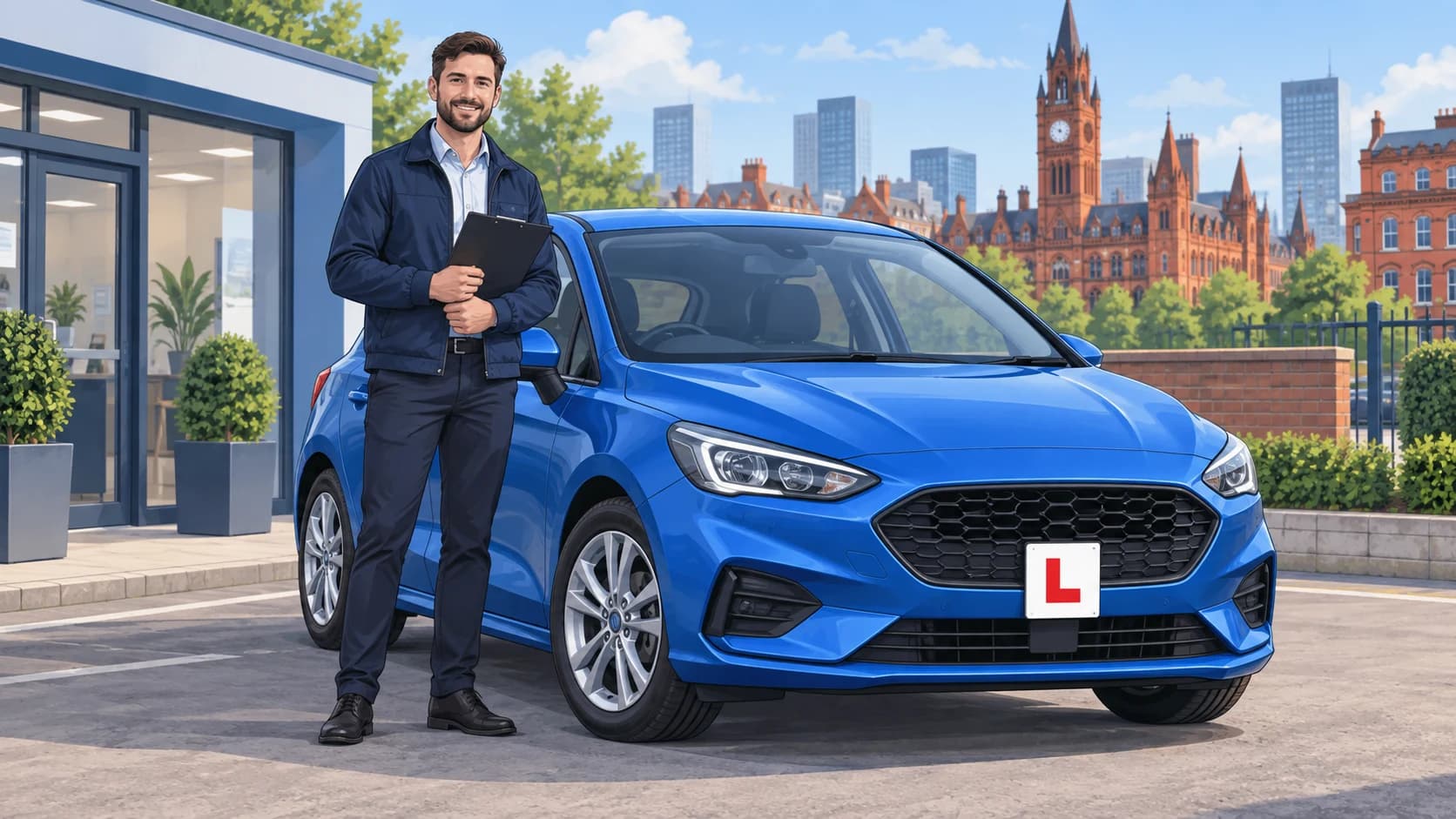
A crash course promises speed, and speed is exactly what you should examine before you buy it. This page is not a sales pitch for crash courses. It is a decision guide: who a crash course genuinely helps, what the experience actually feels like, how to choose between manual and automatic, and which promises you should refuse to believe. Read it before you book anything, and you will choose better.
Is a crash course right for you?
Answer four questions honestly, and the answer mostly writes itself.
How much have you driven before? A crash course works best when it is closing gaps rather than opening a subject from zero. Learners with previous lessons, returning learners, and learners who are nearly at test standard get the most from a concentrated block. Complete beginners can still take one, but they should expect a fuller course and be wary of any provider that suggests otherwise.
Can you clear the time? A crash course needs real days, not days with work or study squeezed around the edges. Tired learners repeat mistakes, and a concentrated block punishes tiredness more than weekly lessons do.
How do you handle pressure? A crash course is intense by design. If intensity sharpens you, the format plays to your strength. If intensity frazzles you, a slower spread of lessons will teach you more, however long it takes.
Have you passed your theory test? You cannot book a practical test until you have, so a crash course booked before your theory is passed leaves you trained with nowhere to go. Sort the theory first; it is the cheapest delay to remove from the whole process.
If your answers point towards a crash course, the next question is what kind.
What to expect
Expect long days and concentrated effort. A crash course day typically mixes briefing, driving, feedback and debrief, repeated across the block, with the skills building from car control through traffic and manoeuvres towards a mock test. Expect to be tired, especially early on, and expect some sessions to feel worse than the one before: learning is rarely a straight line, and a bad session in the middle of a block is normal rather than a sign of failure.
Expect homework of a sort. Not written exercises, but thinking: going over what went wrong in a session, keeping your theory knowledge warm, and arriving the next day with one or two specific things to fix. Expect your instructor to adjust the plan as the course goes on. A rigid course that never changes in response to how you are driving is not a course; it is a timetable.
Expect a mock test near the end, and expect its verdict to matter. The mock test is the moment the course stops being about effort and starts being about evidence. If it shows you are ready, you can book with confidence. If it shows gaps, further lessons are the honest next step.
Manual or automatic?
This is the biggest single choice inside a crash course, and it deserves a clear head. Manual takes more initial effort because of clutch control and gear choice, but a manual licence lets you drive both manual and automatic cars. Automatic removes the clutch and gears entirely, so you can concentrate on observation, judgement and road positioning from the first lesson; it often suits learners who have struggled with coordination, or who simply want to get on the road sooner. The trade-off is that passing in an automatic limits you to automatic cars.
There is no universally right answer. There is only the answer that fits your goals: if you will only ever drive automatics, the automatic route is entirely sensible. If you want the widest choice of cars, or you may need to drive a manual for work or family reasons, the extra early effort of manual pays for itself.
What a crash course cannot do
A crash course cannot guarantee a pass. Nobody can, because the test measures your driving on the day, and no amount of teaching changes that. It cannot guarantee a test slot either, because tests are booked separately through the official GOV.UK service and availability is outside any course provider's control. It cannot skip parts of learning: every skill the test requires still has to be learned, however the lessons are arranged. And it cannot turn a beginner into a test-ready driver by enthusiasm alone; some learners simply need more time, and admitting that is better than taking a test unprepared.
How to choose a provider
Ask about structure before you ask about speed. Does the course start with an assessment? Is there a planned progression rather than a fixed number of sessions regardless of how you drive? Is there a mock test, and what happens if the mock shows you are not ready? Does the provider talk plainly about test booking, including the fact that you must have passed your theory test first and that no slot is guaranteed? The answers to those questions tell you more about a provider than any headline about speed.
- GOV.UK, "Learn to drive a car: step by step": https://www.gov.uk/learn-to-drive-a-car
- GOV.UK, "Book your driving test": https://www.gov.uk/book-driving-test
Learning to drive in Manchester?
Free mock theory tests and hazard perception practice, and lessons with instructors who can see how you're doing.