Cheap Automatic Driving Lessons in Manchester
Why automatic lessons can cost less overall: fewer controls to master, no clutch work, and no stalling. Value explained without the guesswork.
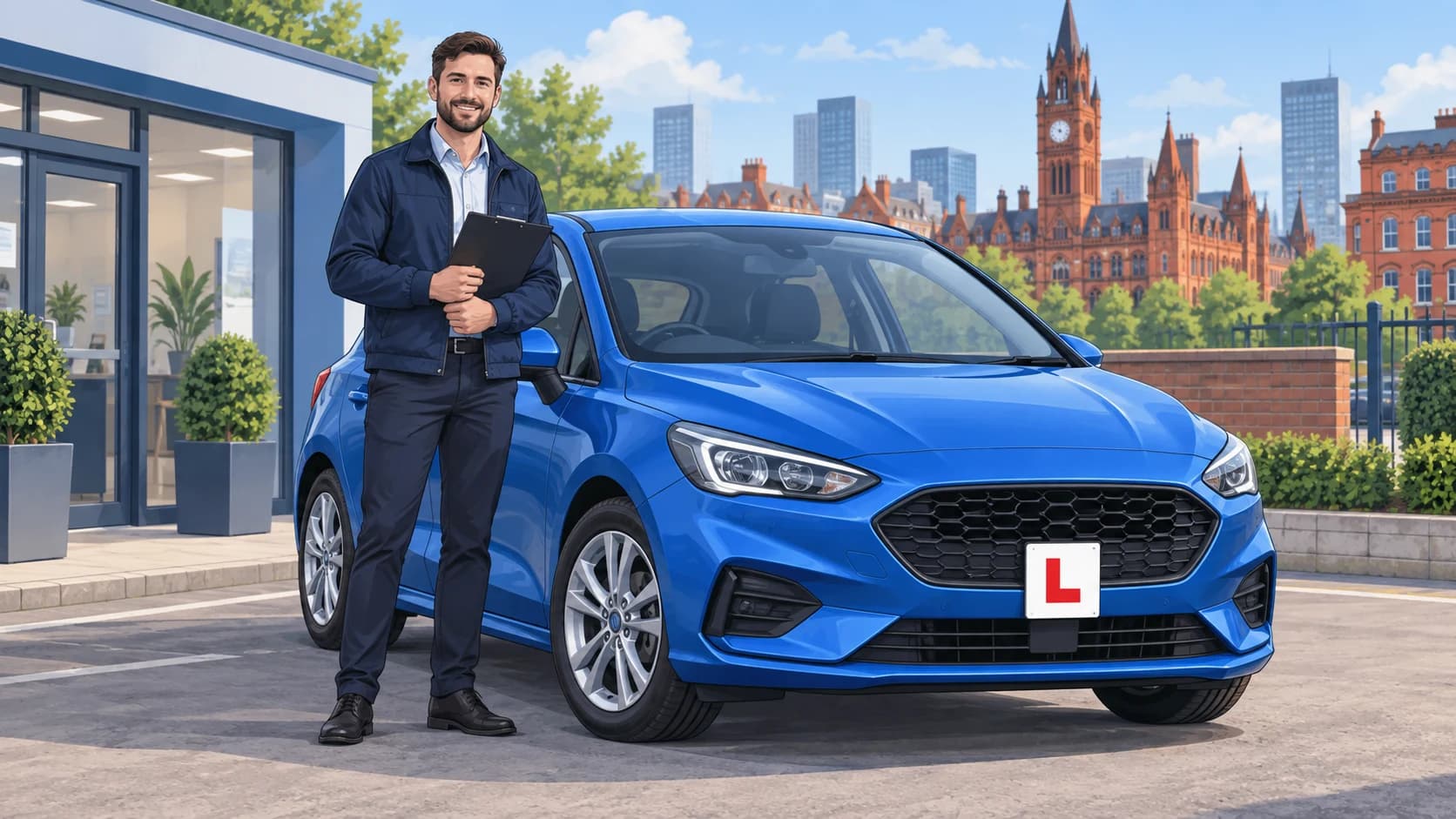
Cheap automatic driving lessons in Manchester are not about finding the lowest price on a list. They are about the total cost of learning to drive, and automatic learning has a genuine value story: fewer things to master means lesson time goes further, and for some learners that means reaching test standard with fewer lessons overall. This page explains where that value comes from, how to keep your total cost down, and why the cheapest option on paper is not always the cheapest way to a licence.
Why automatic can cost less to learn
Learning to drive costs whatever it costs to reach test standard. The biggest factor in that total is how many lessons you need, and automatic learning removes a significant chunk of what lessons are spent on. In a manual car, a large part of early learning goes on clutch control: finding the biting point, coordinating clutch and accelerator, changing gear smoothly, and recovering from stalls. In an automatic, none of that exists. There is no clutch pedal, no gear lever to work, and no stalling from clutch mistakes.
That matters for cost because every lesson has a fixed amount of time in it. Time not spent on clutch control is time spent on junctions, roundabouts, manoeuvres, and judgement — the skills the practical test actually examines. For some learners, that shift means the syllabus is covered in fewer lessons than it would have taken in a manual car. It is not a promise — everyone learns at a different pace, and some learners will need just as many lessons either way — but the mechanism is real: fewer controls to master leaves more of each lesson for road skills.
Where the saving comes from
The saving comes from three places. First, the early stages move faster. Moving off, stopping, and steering are learned without the added complication of clutch coordination, so learners typically get comfortable with basic car control sooner and move into real traffic earlier.
Second, there is less to unlearn. Manual learners spend time correcting clutch habits: riding the clutch, stalling at junctions, choosing the wrong gear. Automatic learners never build those habits, so lesson time is not spent fixing them.
Third, city driving is simpler. Manchester driving involves plenty of stop-start traffic, traffic lights, and queues, and in a manual car every stop and start means clutch work. In an automatic, stopping and starting is a brake pedal job, which leaves attention free for the traffic itself. Lessons in busy areas therefore stay focused on decisions rather than mechanics.
How to keep your costs down
Beyond choosing automatic, a few habits keep the total cost of learning down. Regular lessons beat sporadic ones: long gaps between lessons mean time spent relearning what you had already covered, which adds lessons. Keeping your theory preparation moving alongside practical lessons helps too, because the rules you study for theory are the rules you apply on the road — and a theory test passed in good time means your practical test can be booked when you are ready, not delayed.
Listen to your instructor about readiness. Booking a practical test before you are at test standard rarely saves anything: it usually means more lessons afterwards, not fewer. The cheapest route to a licence is the one that gets you to test standard efficiently and takes the test once, when you are ready. That is a judgement your instructor is best placed to make, and it is worth trusting.
Value is not the same as cheapest
A word of caution: the lowest lesson price is not always the best value. What matters is the total cost of reaching test standard, and that depends on teaching quality, consistency, and fit. An instructor you learn well with, in a car you are comfortable in, with lessons that build steadily week by week, will usually cost less overall than a cheaper arrangement that does not suit you and drags on. Consistency matters as well: sticking with one instructor who knows your progress beats starting over with someone new.
It is also worth being realistic about what automatic lessons are. They teach you to drive an automatic car, and passing in one gives you a licence for automatic cars only. If you later need to drive a manual, that means a further practical test. For learners who will drive automatics, that is no drawback at all — but it is part of the value calculation, and it should be made with open eyes.
Getting started in Manchester
Lessons come with door-to-door pickup across Manchester, so you learn on the roads around your own area. You need a provisional driving licence before taking lessons on public roads, and your practical test can only be booked once you have passed the theory test, through GOV.UK. If value is your priority, say so when you enquire: an instructor who knows you want an efficient route to test standard can plan your lessons around that goal from the start.
Sources: driving test bookings via GOV.UK (https://www.gov.uk/book-driving-test); driving licence categories via GOV.UK (https://www.gov.uk/old-driving-licence-categories).
Learning to drive in Manchester?
Free mock theory tests and hazard perception practice, and lessons with instructors who can see how you're doing.