Can You Learn to Drive Online?
You can revise theory online and practise hazard perception for free, but you cannot learn to drive online — the tests are in person and driving needs a car.
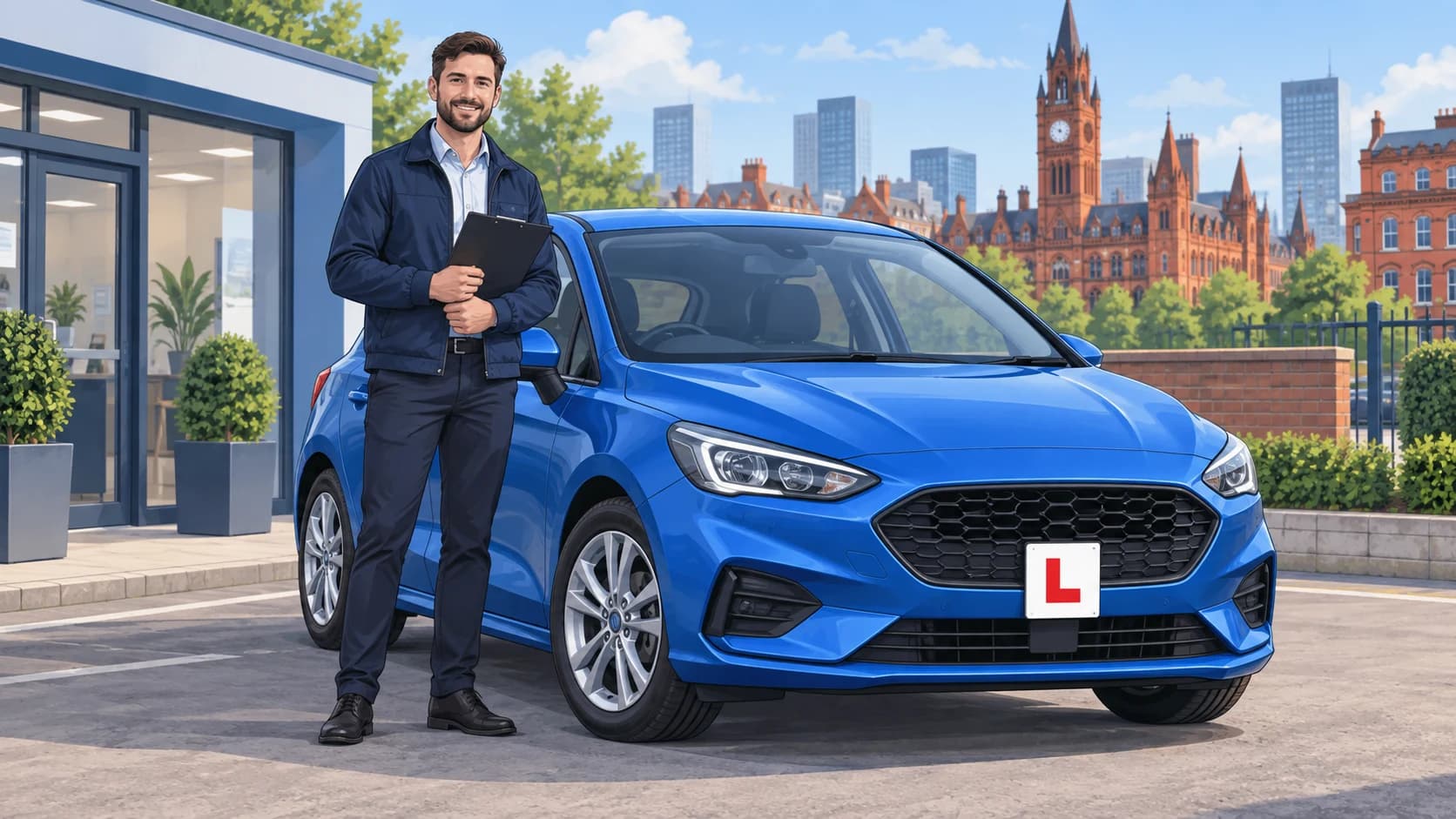
Can you learn to drive online? Half of it, yes. You can revise the theory, practise hazard perception, learn the Highway Code and take mock theory tests, all from your phone or laptop, and you can do a lot of it for free. But you cannot learn to drive online. The theory test and the practical test are both taken in person, and practical driving — the actual driving — can only be learned in a car, with an instructor or a supervising driver beside you. Anyone selling a course that promises a licence without ever getting in a car is selling something that does not exist. This guide explains what you can genuinely do online, what you cannot, and how to use the online part well.
What you can do online: theory
The theory part of learning to drive is made for online study. The route to a licence runs provisional licence, then theory test (£23), then practical test (£62 to £75), then driving once you have passed. The theory test itself has two parts: 50 multiple-choice questions in 57 minutes, and a hazard perception test of 14 video clips. You must pass both parts in the same test, with 43 out of 50 on the multiple-choice and 44 out of 75 on hazard perception.
Everything you need to pass the theory is available online. The multiple-choice questions are based on three books — The Highway Code, Know Your Traffic Signs, and Driving: the essential skills — and all three are available as books, apps and online resources. The official DVSA Theory Test kit is available online for PC or Mac and as an app for phones and tablets, and it covers both the multiple-choice and the hazard perception parts. There are also free mock theory tests online, including the free practice on this site: mock theory tests, hazard perception practice, road signs and the Highway Code, all free. Mock tests are revision aids, not the official test, and passing them does not mean you will pass the real one — but they are the best way to find out what you do not know yet, and they cost nothing to repeat.
Hazard perception is the part of the theory that benefits most from online practice. The test shows you 14 video clips of everyday road scenes, each with at least one developing hazard, and you score up to 5 points per hazard by clicking as soon as it starts to develop. The skill is timing — clicking early, not late — and timing only improves with practice. Watching clips online, clicking, and seeing when you were early or late is exactly how you build it. You cannot practise hazard perception properly from a book; it needs moving pictures, and that is what the online practice gives you.
What you cannot do online: the tests
Neither test can be taken online. The theory test is taken in person at a DVSA theory test centre. You must arrive 15 minutes before it starts, turn off all electronic devices before you enter, store your belongings in a locker, and pass identity and security checks. If you are late, your test is cancelled and you lose your money. You must take your UK photocard driving licence with you, and your test will be cancelled with no refund if you do not take the right things. There is no way to sit the theory test from home, and there is no official online version of it.
The practical test is even further from online: it is a drive, in a real car, on real roads, with a DVSA examiner beside you. It has four parts — an eyesight check, show me/tell me questions, general driving including independent driving, and a reversing exercise — and it lasts around 35 minutes of driving. No website, video or simulator can take it for you, and no online course can give you the result.
What you cannot do online: practical driving
Practical driving is a physical skill, and it can only be learned in a car. Steering, clutch control, observation, judgement of speed and distance, reading the road ahead — none of these can be learned from a screen. A driving simulator can teach you the layout of the controls and the order of a manoeuvre, but it cannot teach you how a car feels when the clutch bites, how to judge a gap in moving traffic, or how to recover when something unexpected happens. That is what lessons are for, and it is why the practical test exists: to check that you can drive safely on real roads, not that you can describe driving.
You do have a choice about how you learn the practical part. You can take lessons with a DVSA-approved driving instructor, which is how most learners do it. You can also practise privately with a friend or family member, as long as they are over 21, have held a full licence for the type of car you are driving for at least 3 years, and you are insured to drive the car — and you must display L plates and follow the rules for learner drivers. What you cannot do is skip the in-car part altogether. There is no online substitute for time behind the wheel, and anyone who tells you otherwise is wrong.
How to use the online part well
Use the online part for what it is good at, and do not expect it to do the rest. Start with the theory: work through the Highway Code, take mock tests until you are consistently passing, and practise hazard perception until your clicks are early. Do the theory early in your learning, not at the last minute — you must usually have passed your theory test before you can book your practical test, and your theory pass certificate number lasts for 2 years, so a pass you leave too long will expire. Then take your practical lessons in the car, and use what you learned online to make the lessons count: if you already know the signs, the rules and the hazard patterns, your instructor can spend the lesson time on driving, not on explaining what a sign means.
Be careful about what you pay for online. The official DVSA Theory Test kit is the closest thing to the real test, and there is good free practice available, including on this site. Paid courses that promise a guaranteed pass, or that charge for booking your theory test, are not giving you anything the official service does not give you cheaper. Book your theory test through GOV.UK, revise with the official kit and free practice, and spend your money on lessons in a real car — that is where the licence is actually earned.
Sources: GOV.UK, "Learn to drive a car: step by step" (https://www.gov.uk/learn-to-drive-a-car) — checked 6 November 2026. GOV.UK, "Theory test: cars" (https://www.gov.uk/theory-test) — checked 6 November 2026. GOV.UK, "Driving test: cars" (https://www.gov.uk/driving-test) — checked 6 November 2026. GOV.UK, "Book your driving test" (https://www.gov.uk/book-driving-test) — checked 6 November 2026.
Learning to drive in Manchester?
Free mock theory tests and hazard perception practice, and lessons with instructors who can see how you're doing.