Automatic Crash Course in Manchester
An automatic crash course in Manchester compresses learning into a short, focused block. Who it suits, how it works, and how readiness is judged.
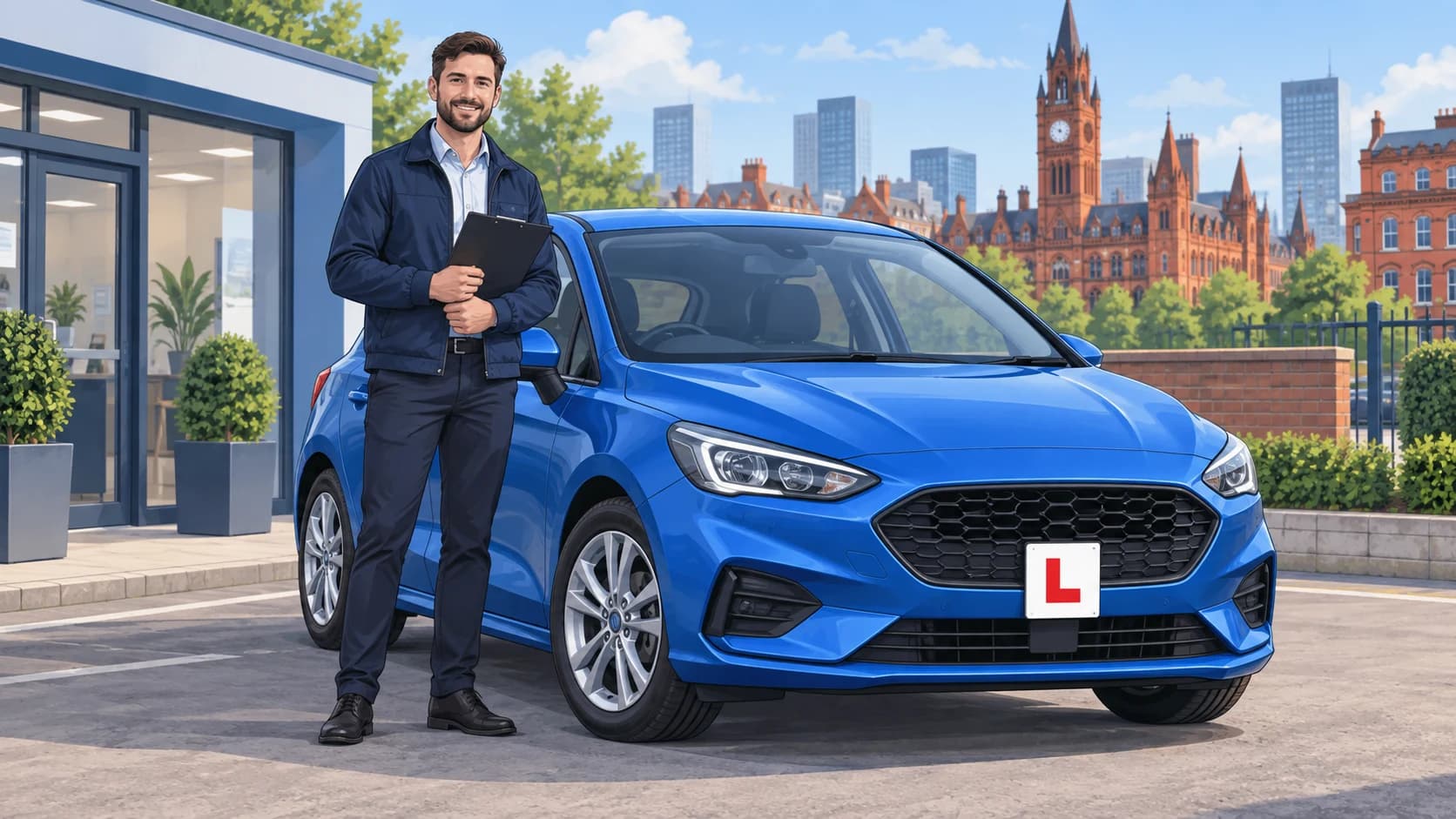
An automatic crash course in Manchester compresses driving lessons into a short, focused block instead of spreading them over months. You learn in an automatic car, so there is no clutch or gear changing to master, and the concentrated schedule means each lesson builds directly on the last while everything is still fresh. For the right learner, that intensity works well. For the wrong learner, it can be exhausting and counterproductive. This page explains what a crash course is, who it suits, how it is structured, and how test readiness is honestly judged.
What an automatic crash course is
A crash course is an intensive way of learning to drive: lessons packed closely together over a short period, rather than one lesson at a time with long gaps between them. The automatic part matters because it removes a whole layer of learning. Without clutch control and gear selection to practise, the compressed schedule can focus on road skills: junctions, roundabouts, manoeuvres, and independent driving. The syllabus is the same as regular lessons — nothing is skipped — but the pace is faster and the gaps between lessons are shorter.
That short-gap structure is the whole point. In weekly lessons, part of each session goes on remembering what you did last time. In a crash course, yesterday's lesson is still fresh this morning, so more of each session goes on new skills and refinement. The trade-off is stamina: intensive learning demands concentration for sustained periods, and tired learners stop absorbing.
Who it suits — and who it does not
A crash course suits learners who have a deadline: a job that needs a licence, a move, or a test already booked. It also suits learners who have driven before, whether in another country or years ago, and need to rebuild skills quickly rather than learn from scratch. And it suits learners who simply learn better by immersion, throwing themselves at something for a focused period rather than chipping away at it.
It does not suit everyone. If you are a complete beginner who has never driven, a compressed schedule can feel relentless, and there is no time to let skills settle between sessions. If you get very nervous under pressure, intensity can amplify that rather than reduce it. And if your schedule cannot genuinely accommodate concentrated lessons — work, study, or family commitments competing for the same days — a crash course will keep getting interrupted, which defeats its purpose. An honest conversation with your instructor before booking is the best way to judge which side of that line you fall on.
How a crash course is structured
A typical crash course starts with an assessment of where you are. If you have experience, your instructor will gauge your current standard and plan from there; if you are starting fresh, the early sessions cover controls, moving off, and steering before moving into traffic. From there, the course progresses through the syllabus in order: junctions and roundabouts, busier roads, manoeuvres, and independent driving, with mock tests towards the end to check test readiness.
Breaks are part of the structure, not an afterthought. Good intensive teaching alternates driving with rest and discussion, because concentration fades and mistakes multiply when a learner is tired. Your instructor will also set things to think about between sessions: a manoeuvre to visualise, a junction type to watch for as a passenger, or a section of theory to revise. That between-session work is where a lot of the learning consolidates, and it costs nothing but attention.
The honesty about readiness
Here is the part that matters most: a crash course does not promise a test pass, and it does not promise you will be ready by the end of it. Readiness is judged by your instructor against the standard of the practical test, not by the calendar. If you reach the end of a crash course and you are not yet at test standard, the honest outcome is more lessons, not a test booked hopefully. A test taken before you are ready rarely ends well, and it usually means more lessons afterwards, not fewer.
That is also why the practical test itself cannot be booked until you have passed the theory test — crash course plans have to fit around that. If your theory is not yet passed, that comes first, and your instructor can advise on the order that makes sense for you. Practical test bookings are made through GOV.UK.
Getting started
To begin, you need a provisional driving licence before taking lessons on public roads. Lessons come with door-to-door pickup across Manchester, so a crash course fits around your home or work rather than a fixed meeting point. When you enquire, be upfront about your experience, your deadline, and your availability: those three things determine whether a crash course is the right shape for you, and what shape it should take. The right intensive course is one built around the learner, not one the learner is squeezed into.
Sources: GOV.UK for booking a driving test (https://www.gov.uk/book-driving-test) and for old and new driving licence categories (https://www.gov.uk/old-driving-licence-categories).
Learning to drive in Manchester?
Free mock theory tests and hazard perception practice, and lessons with instructors who can see how you're doing.