Automatic Car Lessons: Automatic vs Manual — How to Decide
Admin6 min read
Automatic vs manual lessons: the licence restriction, costs, EV relevance, and an honest framework for choosing. Manchester auto lessons from £35.
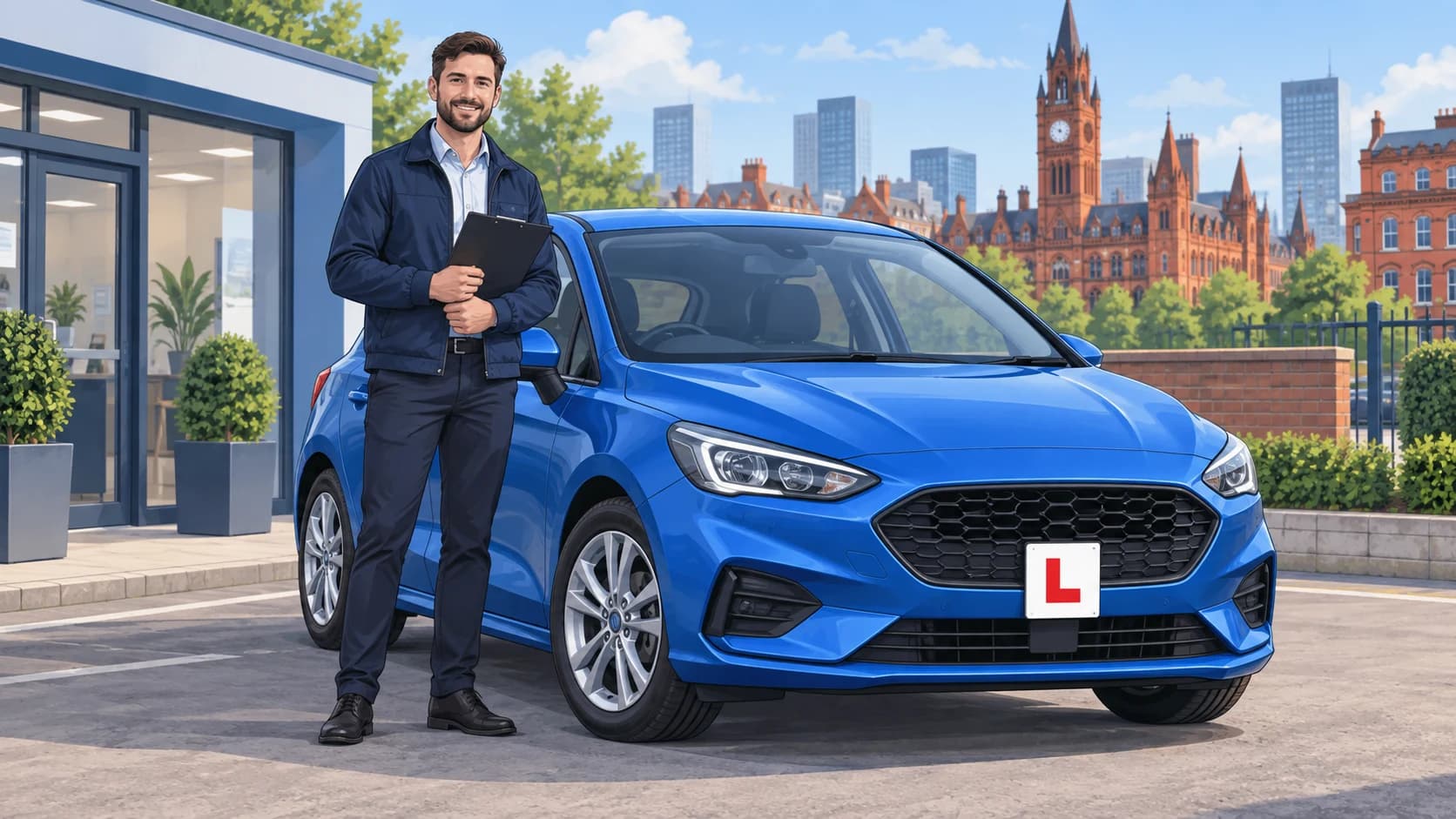
The automatic-vs-manual question used to have a clear default answer: learn manual, because most cars were manual and an automatic-only licence was limiting. In 2026 that default is genuinely up for debate — electric cars are all automatic, automatics are no longer rare or sluggish, and plenty of learners will never need to drive a manual. This guide gives you an honest framework for choosing, including the licence restriction most articles bury in the footnotes.
The licence difference — read this first
Pass your test in an automatic and your licence carries restriction code 78: you're licensed to drive automatic vehicles only. To drive a manual afterwards, you'd need to pass another practical test in a manual car.
Pass in a manual and you can drive both.
This is the single most important fact in the decision. Everything else — cost, difficulty, convenience — is secondary to whether you'll ever need to drive a manual. Be honest with yourself about the next 10–15 years: if there's a realistic chance you'll need to drive a manual (a family car, a work van, driving abroad in hire cars where manuals are still common), learn manual. If you're confident your driving life will be automatic — and for a growing share of learners, especially with the shift to electric cars, it will be — the restriction may never matter.
If you do pass in an automatic and later change your mind, it's not the end of the world: our guide to upgrading an automatic licence to manual explains the process (another practical test, no theory retake needed while your certificate is valid).
Learning difficulty: where automatic genuinely helps
Manual driving adds a whole skill layer — clutch control, gear selection, hill starts, stalling recovery — on top of everything else a new driver must learn: observation, judgement, road positioning, hazard awareness. For some learners that extra layer is fine; for others it's where the hours (and the money) go.
Automatic lessons remove that layer entirely. Common reasons learners choose automatic:
Fewer lessons needed. Not guaranteed, but removing clutch and gear work often means reaching test standard in fewer hours — which can offset any price premium per lesson.
Less to go wrong on test day. Stalling at a junction or rolling back on a hill start are classic manual-test faults that simply don't exist in an automatic.
Anxiety and confidence. Learners who find the multitasking of manual overwhelming often progress faster and enjoy learning more in an automatic — and a confident learner is a safer learner.
Physical considerations. Some medical conditions and disabilities make clutch operation difficult or impossible; automatic is the natural choice.
None of this means automatic is "easier" in a way that matters for safety — the observation, judgement and hazard skills tested are identical. The practical test is the same test, marked to the same standard, whatever the gearbox.
Cost: the honest comparison
Automatic lessons sometimes cost slightly more per hour than manual in some areas, because automatic cars cost more to buy, insure and maintain. The gap is small and shrinking — many instructors now charge the same for both. In Manchester, Learn and Drive's lessons start from £35 for both transmissions.
But hourly rate isn't the comparison that matters — total hours is. A learner who needs 35 hours in an automatic at £37/hour (£1,295) spends less than one who needs 45 hours in a manual at £35/hour (£1,575). Our manual vs automatic comparison digs into the full decision in more depth.
Hybrids, plug-ins and EVs: what counts as "automatic"
A question learners increasingly ask: what about hybrids and electric cars? For licence purposes, the DVSA's definition is simple — a vehicle counts as automatic if it has no clutch pedal operated by the driver. That covers:
Conventional automatics (torque converter, CVT and dual-clutch gearboxes)
Hybrids and plug-in hybrids, which manage gears electronically
Electric cars, which have a single-speed transmission and no gears to change at all
So if you take your test in an EV or hybrid, you get an automatic (code 78) licence — not a manual one. And an automatic licence covers you to drive EVs and hybrids freely; there's no separate electric category. Given that an increasing share of new cars sold in the UK are electrified, that's a practical point in automatic's favour if your next car is likely to be electric.
The electric car factor
Every new electric car is effectively automatic — there's no clutch and no gears to change. As the UK car market electrifies, the share of manual cars on the road will keep shrinking. For a 17-year-old learning in 2026 who expects to drive for the next 50 years, the odds of needing manual skills are lower than for any previous generation. This doesn't make the decision for you, but it belongs in the calculation.
The decision framework
Choose manual if:
You might need to drive manuals — family cars, work vehicles, vans, or driving abroad where hire cars are often manual
You want maximum flexibility and never want to think about the restriction
You enjoy driving and want the full skill set
The price difference in your area is significant and your budget is tight
Choose automatic if:
You're confident your driving will be automatic long-term (increasingly likely with EVs)
You want to reach test standard efficiently and the clutch/gear layer is where you'd struggle
A medical condition or disability makes manual impractical
You've tried manual, hated the gearbox work, and it's draining your confidence
Either way, the instructor matters more than the gearbox. An automatic instructor who specialises in automatics (like our automatic licence instructors) will teach you better than a manual instructor doing automatics on the side.
Automatic lessons in Manchester
Learn and Drive offers automatic lessons across Greater Manchester from £35 per hour, with door-to-door pickup from home, work or college, female instructors available on request, and free theory practice included. Book an automatic lesson or call 07966 587877 — and check current prices for lesson and course options.
Frequently asked questions
Can I drive a manual car with an automatic licence?
No. Passing in an automatic adds restriction code 78 to your licence (automatic vehicles only). To drive a manual, you must pass another practical test in a manual car.
Are automatic driving lessons more expensive?
Sometimes slightly, in some areas, because automatic cars cost more to run. Many instructors charge the same for both. The bigger cost factor is total hours — automatic learners often need fewer.
Is the automatic driving test easier?
The test is identical and marked to the same standard. Automatics remove clutch-related faults (stalling, hill-start rollback), but observation, judgement and manoeuvre faults apply equally.
Will I need fewer lessons in an automatic?
Often, yes — removing gear and clutch work typically shortens the path to test standard, though it varies by learner. Discuss it honestly with your instructor after a few lessons.
Should I learn automatic if I want an electric car?
It's a natural fit — all electric cars are effectively automatic. If your long-term driving will be electric, the manual licence's flexibility matters less than it used to.
Can I switch from manual to automatic lessons halfway through?
Yes. Your progress on observation, judgement and roadcraft transfers completely; only the clutch and gear skills become redundant. Many learners switch after a few manual lessons and progress faster.
Learning to drive in Manchester?
Free mock theory tests and hazard perception practice, and lessons with instructors who can see how you're doing.