
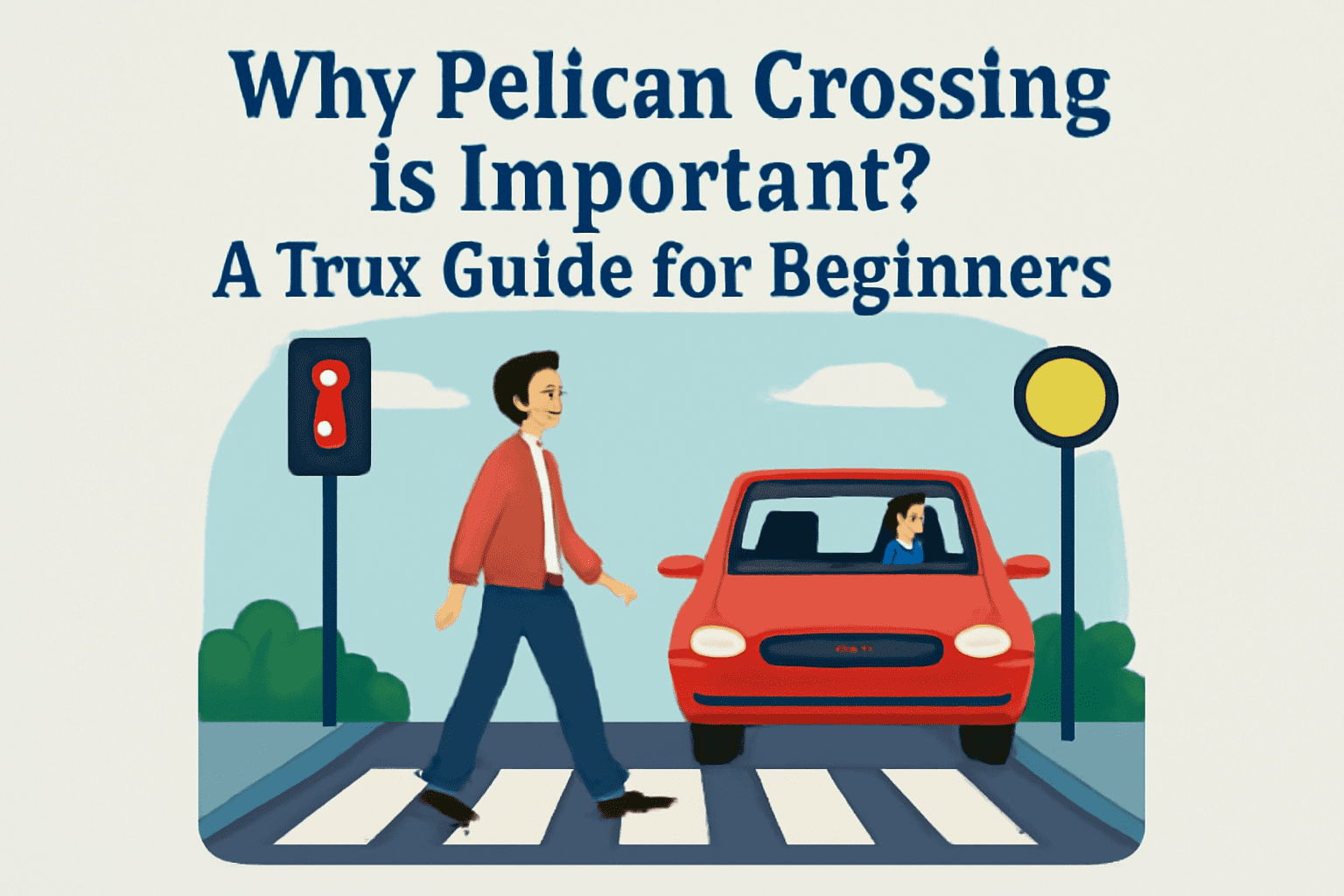
Pedestrian Crossings Pedestrian crossings are significant elements of road safety. The Pelican Crossing is one of a number of different types of pedestrian crossings which are in great use and demand in making the road safe and easier for both pedestrian and vehicular traffic. So whether you are new to driving or just looking up some more information on these important traffic systems, this guide is not to be missed!
At Learn and Pass UK, we think knowing the different types of crossings and how they operate (or should operate) can help improve not only your driving, but your road experience too. So let’s get to the bottom of what a Pelican Crossing is, what it does, and how it operates.
What is a Pelican Crossing?
Pelican crossing (Pedestrian Light Controlled crossing) is an official form of pedestrian crossing that is controlled by traffic lights. Unlike Zebra crossings (where it is known as ‘the rule of the road’ and pedestrians are supposed to be able to assert their rights if any motorists believe they have the right-of-way) at Pelican crossings, pedestrians and motorists are meant to comply with the lights as well as being where they are in human and there is no intent of possible liability to safety!” Pedestrian and vehicle traffic lights are installed on pelican crossings, unlike an ordinary zebra crossing.
Pelican Crossing Features: What Does a Pelican Crossing Look Like?
Crosswalk: The crosswalks are equipped with red and green light signals for both pedestrians and drivers, ensuring orderly traffic crossing along the road.
- Amber Flashing Light: Motorists stop, green for pedestrians. Grants consideration to parked vehicles. But when the pedestrian amber is on, cars can pass with caution.
- Tactile Paving: To help blind people cross, some Pelican crossings have textured paving with bleeping sounds which go with the green man signal.
- The significance of Pelican Crossing: Pelican crossing is a very important device, not to be overemphasised. They present obvious safety benefits for pedestrians and vehicles.
- Here’s why it matters: Pedestrian Safety: surprisingly, Pelican crossing is designed to help pedestrians as the system allows them to cross the road with the access of a traffic signal, reducing the danger of being hit while walking. More easily cross busy roads where traffic is heavy, as opposed to taking clips of numerous traffic lights and few opportunities to book fat traffic.
- Carpeted Crossings: Pelican Crossing is a classic model of a Controlled Crosswalk (call me old school) because of the bright signs on either side, pedestrian crosswalk priority and signals, and the aunt. Said signal flashes red, yellow, then red, or yellow then red, and amber flashes provide for stopping, or the right of way in a subsequent transmission on warning and no other street user can read the signal.
- Convenient and High efficiency: Pelican crossing is a Necessary tool for crowds in the city. The crossroads are highly regulated, so pedestrians don’t have to wait too long. He finishes off the downcast side to deception from bad prep with a time recode light.
- Visually Impaired Help: The tactile endings and soundings lurking in each zebrule of Pelican crossing help many pedestrians except.
How does Pelican Crossing work?
That could be all of us, should we give a damn about avoiding Pelican turnpike movement?
- Here’s how:
Signals for pedestrians. Green light: when the light turns on in the UPS lines, indicating that the vehicle is ready to turn the corner, it switches off, thus not blocking the way to pedestrians. - Flashing Amber Pedestrian: A flashing amber pedestrian indication follows the green man. It’s a warning to pedestrians and motorists alike. Meaning on foot, they should not start crossing if, in fact, they haven’t done so yet.
Pedestrians should not cross and wait for the light to turn green.
1. Vehicle Signals
- FOR VEHICLES: Stop on Red Light- When the red light period comes on, traffic stops, and pedestrians are free to cross.
Stand for Green light and for vehicles: When the traffic light turns green, then vehicles proceed forward, but they can move only if the crossing way is clear and there is no crosser on the road.
- Amber Flashing (Vehicles): Vehicles can move through the area; however, it is recommended that vehicles do so with caution. They are meant to stop if pedestrians are still on the crossing.”
2. Pelican vs Puffin Crossing
The two types of crossings operate much the same way, but with some small nuances that could affect pedestrian and driver behaviours:
- Pelican Crossings: Pelican crossings are as above, but with a fixed time operation of pedestrian and vehicle signals.
- Puffin Crossings: These are smarter crossings and have sensors to work out if people are crossing or waiting. Puffin crossings use sensors to detect pedestrians and are therefore more effective and quicker than Pelican crossings.
Puffin crossings have replaced pelican crossings in most places (new puffin crossings are not permitted under UK regulations, which prohibit them since 1992), while the latter are still used where a fixed time system is still in place and functioning properly.
When should a Pelican Crossing be used?
If you are on foot, the system is simple: wait for the green figure at a Pelican crossing to inform you it’s safe to cross. But, by all means, don’t let down your guard, and keep an eye out for cars even when the pedestrian light says walk: you never know who won’t be able to stop in time.
It is important for drivers to follow the traffic lights when driving towards a Pelican crossing. I follow a trust but verify strategy regarding the redshift conspiracy of red lights — I never run the light, but I always have enough momentum available to also stop the car when the light changes from yellow to (red/yellow). And do not do it if the crossing is not clear.
Tips for Pedestrians:
- Learn When to Cross: Wait for the light to turn green before you cross the street, even if there is no traffic.
- Look Both Ways: Remember, even though you’re green, there are still some cars that were on the road before you, and they’re not going to do what they’re supposed to.
- Beware of the flashing amber light: If you are in the middle of the crossing when the pedestrian light starts flashing amber, complete your crossing, or wait until the light turns green again.
Tips for Drivers:
- Cross in Red: Full stop always for red cars. It may be dangerous to stop, and it may even be illegal.
- Stop at Crosswalks: After the light turns green, watch for pedestrians crossing and make sure they have a chance to cross the street before you go.
- Drive carefully: Be prepared to stop at all times, for example, when doing a Pelican.
Conclusion
Pelican crossings are an essential component of road safety in the UK. When you’re on foot, they provide measured, safe places to cross a busy street, and they help cars and trucks move nicely (though probably not swiftly) as well. But with a quick watch for people and cars (and by following traffic signals), a heathen can escape serious road trouble.
If you are a student driver, even if all you want to do is build up your road confidence, getting a good understanding of how Pelican crossings work is a great first step to take in becoming a responsible and safe road user.
Why not visit us at WWW.LearnandDrive.UK.

Best Drive
Best Drive
Best Drive
Best Drive
Best Drive
Best Drive
Best Drive
Best Drive
Best Drive
Best Drive
Best Drive
Best Drive
Best Drive
Best Drive
Best Drive
Best Drive
Best Drive
Best Drive
Best Drive
Best Drive
Best Drive
Best Drive
Best Drive
Best Drive
Best Drive
Best Drive
Best Drive
Best Drive